
Intercultural Training Oman
Oman connects a centuries-old maritime trading heritage with an economy developing new industries, ports and international partnerships.
Practical preparation for executives, technical specialists and international teams working with Omani organizations across logistics, industry, energy, tourism and other sectors.
Discuss Your Training Needs →Maritime heritage, industrial development and new economic opportunities
Oman's economic history extends well beyond oil and gas. For centuries, maritime trade connected its ports with East Africa, India and wider Indian Ocean markets. Agriculture, fisheries and commerce supported livelihoods long before hydrocarbon revenues transformed the country's infrastructure and economy.
Today, Oman occupies a strategic position along international shipping routes. Ports and industrial centers support manufacturing, logistics and trade. Under Oman Vision 2040 and the Eleventh Five-Year Development Plan (2026–2030), the country is pursuing diversification, private-sector development and opportunities for Omani professionals. For international companies, this means engaging with different sectors and regional business environments, not one uniform national market.
Four dimensions of doing business in Oman
Maritime trade and international connections
Oman's historic commercial links across the Indian Ocean help explain its position between regional and international markets. Present-day partnerships may involve local enterprises, international suppliers, shipping operators and investors with very different interests.
Ports, industry and diversification
Muscat, Sohar, Duqm and Salalah are not interchangeable business settings. Under Vision 2040, Oman is developing manufacturing, renewable energy, fisheries, mining, tourism and logistics alongside oil and gas. Industrial operations, port logistics and service-sector activities involve different stakeholders, decision procedures and commercial responsibilities.
Omani society and regional diversity
Unlike in Qatar, Kuwait or the UAE, Omani citizens form a majority of the population, so many teams include a substantial share of Omani colleagues. Regions such as the Batinah coast, the interior and Dhofar have distinct histories and social ties, and Indian Ocean connections are still visible in the country's linguistic and cultural diversity. These perspectives can matter in professional life, but they do not define how an individual works.
Omanization and workforce development
Developing Omani professionals is an important business responsibility. Employers must consider recruitment, skills transfer and career development alongside delivery schedules, technical standards and the specialist experience required by individual projects.
Understanding the situation before choosing a response
An international engineering team may experience a delay in an Omani industrial project and interpret it as a difference in attitudes toward deadlines. The explanation could instead involve a technical interface, a supplier obligation, a changed project sequence or an approval still required by the client. Cultural Judgment means testing the interpretation before acting on it.
Connecting Contradictions becomes relevant when valid objectives remain in tension: for example, ensuring immediate specialist performance while developing the capacity of Omani colleagues. The challenge is to work with both requirements rather than dismiss either one.
Why Cultural Judgment Matters in the Age of AI
AI can describe Oman Vision 2040, compare the roles of Sohar, Duqm and Salalah, or outline policies for developing Omani talent. Those descriptions help an international manager prepare. They cannot, however, establish why a particular port operation has stalled: the cause might lie in a contractor interface, a technical dependency, a client's approval process or expectations that have not been made explicit.
In Oman, where projects can bring together national development objectives, international expertise and distinct regional business settings, the decisive task is to investigate the situation rather than apply a ready-made country explanation. Our training develops the ability to distinguish evidence from inference, clarify responsibilities with the people involved and make considered decisions when several legitimate priorities must be addressed at once. AI can inform that inquiry, but it cannot conduct the relationship or exercise judgment on a leader's behalf.
Preparing for work in Oman's diverse business environments
The program connects country knowledge with the specific responsibilities of participants. Topics are selected for the industry, the partner organizations and the situations that matter to the assignment.
Omani society and regional diversity
Oman's historical development, commercial traditions, social relationships and differences across regions. Examine their relevance without assigning fixed characteristics to individual counterparts.
Economic priorities and Vision 2040
The role of oil and gas, private investment, diversification and the 2026–2030 development plan. Connect these priorities to the participant's industry and organizational responsibilities.
Ports, logistics and industrial cooperation
Collaboration involving operators, contractors, suppliers and clients in places such as Sohar, Duqm and Salalah. Clarify interfaces, responsibilities and expectations across organizations.
Professional relationships and communication
Initial meetings, business introductions, ongoing cooperation and the clarification of commitments. Examine how trust and credibility develop through professional conduct and reliable delivery.
Projects, decisions and accountability
Working with technical and commercial requirements, approvals, changes in scope and multiple stakeholders. Distinguish procedural, organizational and interpersonal explanations when difficulties arise.
Omanization and skills transfer
Recruitment, mentoring, knowledge transfer and the development of Omani professionals. Consider how meaningful responsibility can coexist with demanding operational standards.
Leading international and Omani teams
Responsibility, feedback, cooperation and different professional backgrounds. Where a deeper team intervention is needed, explore MENA Team Collaboration.
Living and working across Oman
Preparation for longer assignments, including professional integration, daily life and differences between locations. More extensive support is available through MENA Expat Preparation.
For the roles and responsibilities of international business
Market entry, industrial delivery, partnerships and expatriate assignments require different preparation. We adapt the program to the decisions and relationships each group encounters.
Executives and Country Managers
Leaders responsible for market entry, strategic partnerships and international operations in Oman.
Logistics and Supply Chain Professionals
Teams working with ports, transportation networks, freight operations and international supply chains.
Energy, Industry and Engineering Teams
Technical specialists and project leaders involved in industrial facilities, renewable energy and complex contracts.
Commercial and Investment Teams
Business development professionals assessing partners, negotiating commercial arrangements and developing local operations.
HR, Talent Development and Mobility
Teams planning assignments, developing Omani professionals and supporting skills transfer and international staff.
Omani and International Colleagues
Mixed teams seeking workable agreements on responsibilities, communication and joint performance.
Flexible formats for different assignments
We determine the format from the participants' experience, their professional situation and the depth of preparation required.
Oman Business Briefing
A focused online session for an upcoming meeting, business visit, negotiation or assignment. Questions are addressed in the context of the specific industry and project.
Applied Intercultural Workshop
A half-day or full-day interactive workshop combining country context with practical case analysis and exercises involving the participants' own work.
Extended Development Program
Several linked sessions for executives or teams with continuing responsibilities in Oman. Current situations can be reviewed and revisited between sessions.
Delivery: Live online, onsite or hybrid; English, German or Arabic according to the assignment.
Customization: Topics, facilitation and learning methods are selected according to participants, sector and business objectives.
Relevant country knowledge and applied experience
A meaningful Oman program needs familiarity with the country as well as the industry and commercial relationships in which participants work.
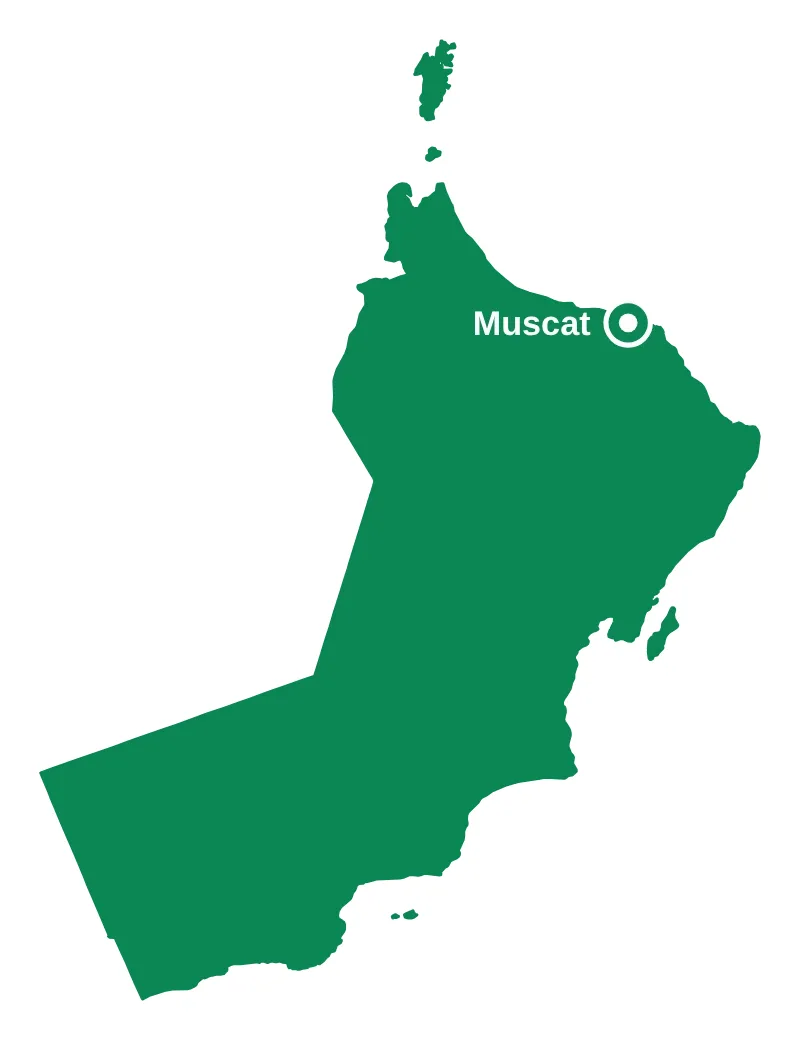
Different locations, different professional contexts. A port operation in Salalah, an industrial project in Sohar, an investment discussion in Muscat and a development project in Duqm may involve distinct organizations and working arrangements. The training reflects the actual setting.
International expert network. Arabia Interculture works with trainers and country specialists across more than 70 countries. Learn about Our Experts.
Experience since 2006. Founded by Ahmed Hussein, Arabia Interculture provides tailored training, coaching and advisory services for international organizations working across the MENA region.
Support beyond country-specific training
For individual executive preparation or ongoing challenges, these services complement the Oman program.
Planning your Oman training
What makes Oman different from other Gulf business environments?
Unlike Qatar, Kuwait and the UAE, Oman has a majority citizen population, which shapes the composition of many workplaces and makes Omanization part of everyday management. Its Indian Ocean connections, distinct regions and port-led diversification also set it apart from the larger domestic market of Saudi Arabia. The practical implications depend on the industry and the individual organization.
Can the training focus on logistics, ports or industrial projects?
Yes. We can work with situations involving project interfaces, supplier relationships, technical communication, contractual expectations and cooperation across organizations in locations such as Sohar, Duqm and Salalah.
Do you cover Oman Vision 2040 and economic diversification?
Yes, where relevant to the participants. We examine the implications of economic diversification and investment priorities for their industry, without turning the workshop into a general economic or political briefing.
Can the program address Omanization and workforce development?
Yes. The program can incorporate recruitment, mentoring, career pathways, technical knowledge transfer and cooperation between Omani and international professionals.
Is the training suitable for experienced expatriates and mixed teams?
Yes. We adapt cases and exercises to the participants' current responsibilities. Omani and international colleagues may attend together to examine differences in interpretation and build practical working agreements.
Which formats and languages are available?
We offer online briefings, interactive workshops and longer programs, delivered online, onsite or in hybrid form. English, German and Arabic are available according to the assignment.
Discuss your training requirements
Tell us where in Oman your organization works, which partners or teams are involved, and what responsibilities your participants need to prepare for. We will develop the program accordingly.
In an initial conversation, we clarify participants' experience, objectives and preferred format before preparing a tailored proposal.
Discuss Your Training Needs →