
Intercultural Training United Arab Emirates
Working successfully in the Emirates requires understanding the local business environment alongside its international character.
Practical preparation for professionals engaging with Emirati stakeholders, leading diverse teams, and navigating business relationships across the UAE.
Discuss Your Training Needs →A global business hub in transition
The United Arab Emirates has established itself as a major international hub for trade, investment, finance, and logistics. Economic diversification, advanced infrastructure, and ambitious development strategies continue to create opportunities for international companies.
National initiatives such as We the UAE 2031 and Dubai's D33 Economic Agenda are driving investment in technology, advanced industries, and sustainable development. At the same time, the UAE's highly international workforce and evolving economic policies are reshaping business relationships, management practices, and professional expectations.
Four realities shaping business in the Emirates
A federation of distinct economic centres
Abu Dhabi's energy and investment institutions operate in a different setting from Dubai's international trading and services economy. Sharjah and the Northern Emirates have their own industrial and commercial priorities. These differences matter when companies establish operations or identify local partners.
Emirati society within an international population
International professionals may spend years working mainly with other expatriates. Yet relationships with Emirati families, businesses, and institutions remain important in many sectors. Familiarity with Dubai's international workplace does not necessarily mean familiarity with Emirati society.
Emiratisation and professional development
The UAE is expanding private-sector employment opportunities for its citizens. International companies must consider recruitment requirements, career development, and the integration of Emirati professionals into established teams and management structures.
Different institutions, different expectations
An international supplier may deal with a government-related company, an Emirati family enterprise, or a multinational business in a free zone. Understanding who has authority, how commitments are formalized, and which stakeholders need to be involved depends on the organization and the situation.
Interpreting the context before acting
In the UAE, behaviour at work may reflect Emirati social expectations, organizational procedures, international professional practices, or individual circumstances. Our approach develops the ability to distinguish these influences and respond appropriately, rather than relying on fixed assumptions about national culture.
Cultural Judgment →
Consider a project manager working with a government-related company in Abu Dhabi. A technical counterpart expresses support for a proposal, but formal approval does not follow. Does the delay concern technical objections, internal authorization, or other stakeholders? Cultural Judgment helps the manager investigate these possibilities before drawing conclusions or escalating.
Connecting Contradictions →
A multinational company in Dubai is increasing Emirati participation in professional and management roles. Its leaders must maintain performance requirements while creating meaningful opportunities for development. Connecting Contradictions helps them address both responsibilities without reducing the situation to a choice between competing priorities.
Why Cultural Judgment Matters in the Age of AI
AI can compare the regulatory environments of Abu Dhabi and Dubai, describe Emiratisation policies, and explain the differences between free-zone companies and government-related entities. Yet a project leader dealing with an apparently supportive counterpart still has to establish why an agreement is not progressing. Is a further approval required, are other stakeholders involved, or have the parties understood the commitment differently? None of these explanations follows reliably from general information about the UAE.
In a workplace bringing together Emirati institutions and professionals from many countries, the difficult task is often to distinguish the influences that matter in this particular case. Our training strengthens participants' ability to question an initial reading, seek relevant evidence, and make decisions without treating either an AI-generated answer or a cultural generalization as a substitute for their own judgment.
What working in the UAE requires
Training content is selected according to the participants' responsibilities, the emirates in which they operate, and the organizations they work with. We combine essential country knowledge with situations drawn from business practice.
Emirati society and business relationships
Understand how the federation developed, the importance of Emirati identity, and the role of family, religion, and social relationships in professional life. Explore how trust is established with local counterparts.
Working across the seven emirates
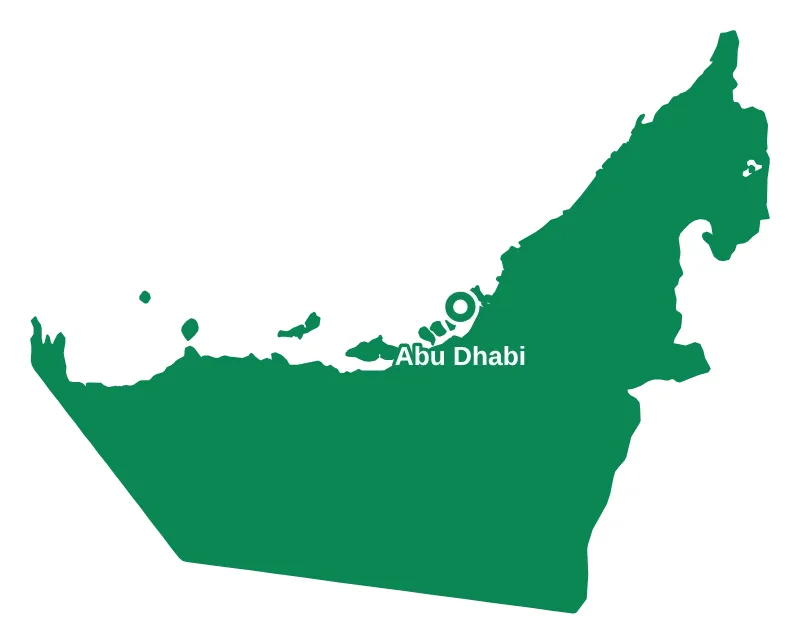
Examine differences between Abu Dhabi, Dubai, Sharjah, and other emirates in their economic priorities and institutional environments. Identify what these differences mean for your own business activities.
Meetings, hospitality, and professional conduct
Prepare for introductions, business visits, invitations, and formal meetings. Understand how courtesy, seniority, relationship-building, and professional protocols influence these encounters.
Communicating in multilingual workplaces
Work through situations involving different levels of English proficiency, indirect disagreement, feedback, and assumptions about commitments. Practice clarifying meaning without undermining professional relationships.
Leadership and Emiratisation
Address challenges in recruiting, developing, and leading Emirati and international professionals. Explore how managers can align organizational requirements with employees' different experiences and career expectations.
Negotiating with UAE-based organizations
Prepare for negotiations involving family businesses, government-related entities, and international companies. Examine how to identify decision-makers, understand approval processes, and follow up on agreements.
Managing multicultural project teams
Analyze tensions concerning responsibility, deadlines, reporting, and decision-making. Develop practical ways to establish shared expectations while respecting different professional backgrounds.
Relocating and establishing professional networks
Prepare for working and living in the UAE, including everyday professional conventions, relationships outside expatriate circles, and the adjustment to new social and organizational environments.
Preparation for different professional contexts
The needs of an executive establishing a UAE operation differ from those of a project engineer, a sales director, or an HR team managing international employees. The program reflects the work participants actually perform.
Executives and country managers
Leading UAE operations, engaging senior stakeholders, and navigating relationships between headquarters and local institutions.
Business development and investment teams
Entering the UAE market, developing partnerships, and negotiating with local businesses, investors, and government-related organizations.
Project and technical professionals
Coordinating engineering, infrastructure, energy, construction, or technology projects involving UAE clients and international partners.
Leaders of multicultural teams
Establishing clear responsibilities, resolving misunderstandings, and leading colleagues with different professional and cultural backgrounds.
International assignees
Assuming new roles in Abu Dhabi, Dubai, or other emirates, and building effective working relationships from the outset.
HR, Global Mobility, and Emirati teams
Supporting employee integration, Emiratisation-related development, and cooperation between local and international professionals.
Built around your UAE business experience
Some participants are preparing for their first assignment. Others have worked in the Emirates for years but face new responsibilities or unfamiliar stakeholders. We design the format and depth accordingly.
UAE business orientation
A focused online session introducing the local business environment, professional conventions, and questions most relevant to an upcoming assignment or business visit.
Applied intercultural workshop
A half-day or full-day workshop using practical exercises, business cases, and participant experience. Suitable for teams preparing for sustained cooperation with UAE-based colleagues or partners.
Executive and team development
A sequence of tailored sessions examining current professional challenges. Participants can apply insights between meetings and bring new situations back for discussion.
Delivery: Live online, onsite, or hybrid. Programs are available in English, German, or Arabic.
Program preparation: We consider the relevant emirate, the type of organization, the participants' experience, and the specific business cases involved.
Knowing the Emirates from within
Working for years in an international company in Dubai does not necessarily provide insight into Emirati society or the relationships that influence local business decisions. Our country experts bring both perspectives into the training.
Experience in local and international settings. Our specialists draw on sustained personal and professional involvement in the UAE. They understand the experience of international professionals while bringing knowledge of local institutions, relationships, and everyday business practice.
Professional training and intercultural expertise. Arabia Interculture's approach draws on the international business experience, psychological expertise, and intercultural work of Ahmed Hussein , the company's founder. Since 2006, Arabia Interculture has supported executives, specialists, and international teams working in the UAE and across the MENA region.
Support beyond intercultural training
When the challenge concerns a particular executive responsibility, a sensitive business relationship, or an ongoing leadership situation, we provide more individualized support.
Preparing for your UAE business context
We already work in Dubai. What would we gain from this training?
Extensive experience in Dubai's international business community does not always translate into familiarity with Emirati institutions, local business relationships, or other emirates. For experienced participants, we focus on the situations they currently find difficult or particularly important.
Can the program focus specifically on Abu Dhabi or Dubai?
Yes. We can concentrate on the emirate where participants conduct most of their business. For example, work with an Abu Dhabi government-related entity may require different preparation from developing a commercial partnership in Dubai. Programs can also address activities spanning several emirates.
Our colleagues come from many countries. How does the training address this?
We examine actual situations involving Emirati and international colleagues. These may concern communication, reporting, responsibility, leadership, or disagreement. The objective is to improve how participants understand one another and cooperate, rather than categorize employees by nationality.
Can we use cases from our own UAE projects?
Yes. We encourage participants to bring relevant professional situations involving clients, colleagues, project partners, or stakeholders. Sensitive details can be anonymized. These cases allow participants to examine different interpretations and develop responses relevant to their actual responsibilities.
Can Emirati and international employees participate together?
Yes. Joint workshops can be useful for teams working through different expectations concerning communication, responsibilities, leadership, and collaboration. We adapt the exercises and discussions to the composition and experience of the group.
How do you determine the scope and cost of the training?
We first discuss the participants, their responsibilities, the relevant business environment, and the issues the training should address. We then recommend an appropriate duration and format and provide an individual proposal with the corresponding fee.
Tell us about the UAE business situations you face
Tell us whether you are preparing for a new assignment, working with Emirati stakeholders, managing an international team, or facing a particular challenge in your UAE business activities.
We discuss your business situation, the experience of your participants, and the outcomes you want to achieve. Based on this conversation, we develop a suitable training proposal.
Discuss Your Training Needs →